Caregiver Organizers
Caregiver Binder Checklist: What to Put in It
Quick answer: A caregiver binder checklist starts with an emergency information page, then a current medicine list, doctors and pharmacy, insurance details, an appointment log, visit notes and a page listing where important papers are kept. Put the most urgent pages in front, fill in what you know and add the rest over time.
When a parent needs more care, the paperwork grows with it. Discharge papers, pill bottles, appointment cards and phone numbers end up in purses, drawers and text threads. Then someone asks a simple question, like "When did the doctor change that medicine?", and the answer is hard to find.
A caregiver binder puts it all in one place, so you don't have to carry it in your head. This checklist shows what to include, in what order, and how to keep it current without it becoming one more chore. For a broader look at setting up the whole system, see how to organize an aging parent's medical information.
This guide is general information about organizing records. It isn't medical or legal advice. Follow your parent's care team for medical questions, and talk with a qualified professional about legal documents.
What is a caregiver binder?
A caregiver binder is one folder, usually a 1.5 to 2 inch ring binder with tab dividers, that holds the information anyone would need to help care for a loved one. It's for whoever goes to appointments, the brother or sister covering for a weekend, and the neighbor who might need to call for help.
It doesn't replace the doctor's records. It's your family's own working copy: what you've been told, what has changed and who to call.
What sections should it have?
Start with the pages you'd need in a hurry, then add the rest. Here is a simple order that works for many families:
| Tab | What goes in it | Update it when |
|---|---|---|
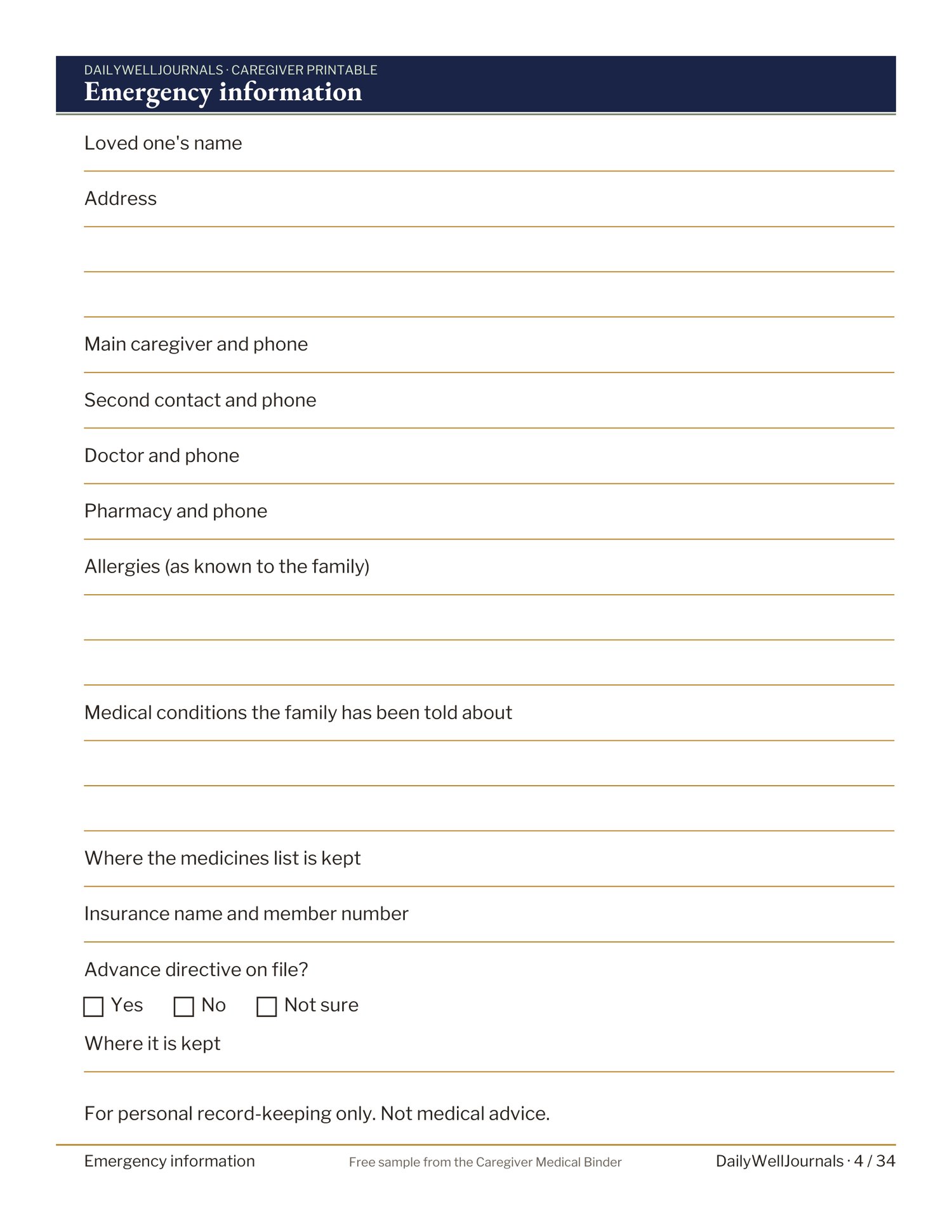
| 1. Emergency information | Address, main contacts, allergies, main doctor, pharmacy, insurance number and where the medicine list is kept | Anything on it changes |
| 2. Medicines | A current medicine list copied from the pharmacy labels, plus a log of changes | A medicine is started, stopped or changed |
| 3. Doctors and pharmacy | Names, specialties, phone numbers, addresses and patient portal notes | You add or change a provider |
| 4. Insurance | Copies of insurance cards (front and back), plan phone numbers and a log of calls | A new card arrives or the plan changes |
| 5. Appointments and visit notes | Upcoming visits, questions to ask, what the doctor said and tests ordered | After each visit |
| 6. Health history | Conditions as the doctor has described them, surgeries, hospital stays and vaccinations | After a hospital stay or new diagnosis |
| 7. Daily care | Notes on meals, sleep, mood and anything new, if you track day to day | Daily or weekly |
| 8. Bills and expenses | EOBs, bills you are still checking and a medical expense tracker | New papers arrive |
| 9. Where papers are kept | A list of where important documents are stored and who has copies | A document is moved or updated |
You don't need every tab on day one. Emergency information and the medicine list cover most urgent moments, so start there and add one section at a time.
Which contacts and documents belong in it?
Contacts checklist
- Family members and close friends who help, with the best number for each
- Primary care doctor and any specialists
- Pharmacy, including its hours and refill line
- Insurance member services numbers
- Home care, meal or transportation services, if your parent uses them
- Neighbors who have a key or check in
- A faith community or anyone else your parent would want told
Documents checklist
- Copies of insurance and ID cards, front and back
- The current medicine list and a log of recent changes
- Recent discharge papers and visit summaries
- Test results your parent wants to keep
- EOBs and medical bills you are still checking (our guide on how to check a medical bill against your EOB can help)
- A page listing where important papers are kept
Some families also keep copies of documents like a power of attorney or an advance directive, if their parent has them. The binder simply notes where the originals and copies are kept, and who has them. For questions about what those documents mean or whether they're needed, talk with a qualified professional.
Because the binder holds private information, keep it somewhere safe but easy for helpers to find, and think about what to leave out. Many families write only the last four digits of account numbers.
How do you keep it updated?
A binder only helps if it's current. Doing a little at a time keeps it to minutes, not hours.
- Update after every visit. Before you leave the parking lot, jot down what changed: new medicines, tests and follow-up dates.
- Mark medicine changes right away. Cross out instead of erasing, and write the date and who made the change.
- Do a weekly five-minute check. Pick a regular time, like Sunday evening, to file new papers and look at the week's appointments.
- Date every page. A "last updated" line at the top tells helpers how current it is.
- Tidy it each season. Every few months, clear out old papers and reprint any log that's full.
If your parent is able, invite them to look through it with you. It's their information, and many people feel more at ease when they know what's in it. For keeping the medicine pages accurate, see how to keep track of a parent's medications.
Should it be paper or digital?
Both work, and many families use both. Pick the one your family will actually keep up with.
- Paper is easy to grab. It works without a device, a signal or a password, and you can hand it to a nurse or a new helper. Many older adults also find it easier to read.
- Digital is easy to share. A shared spreadsheet lets family in different towns see the same notes, and it's simple to update from anywhere.
- A mix often works best. Keep a paper binder by the phone and for appointments, and keep daily logs or a shared medicine list in a spreadsheet.
If you go digital, make sure at least one other trusted person knows how to open it.
A binder that's ready to fill in
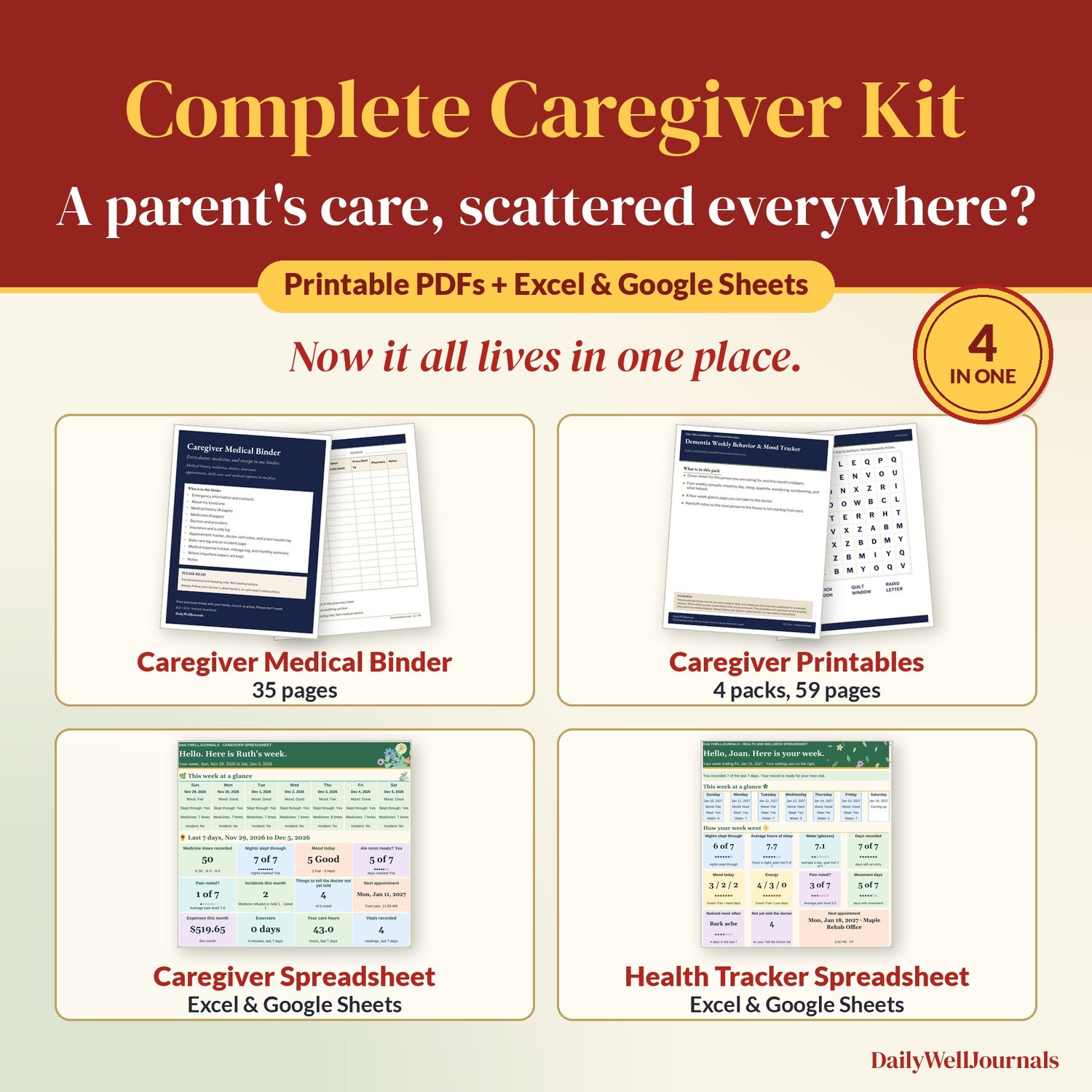
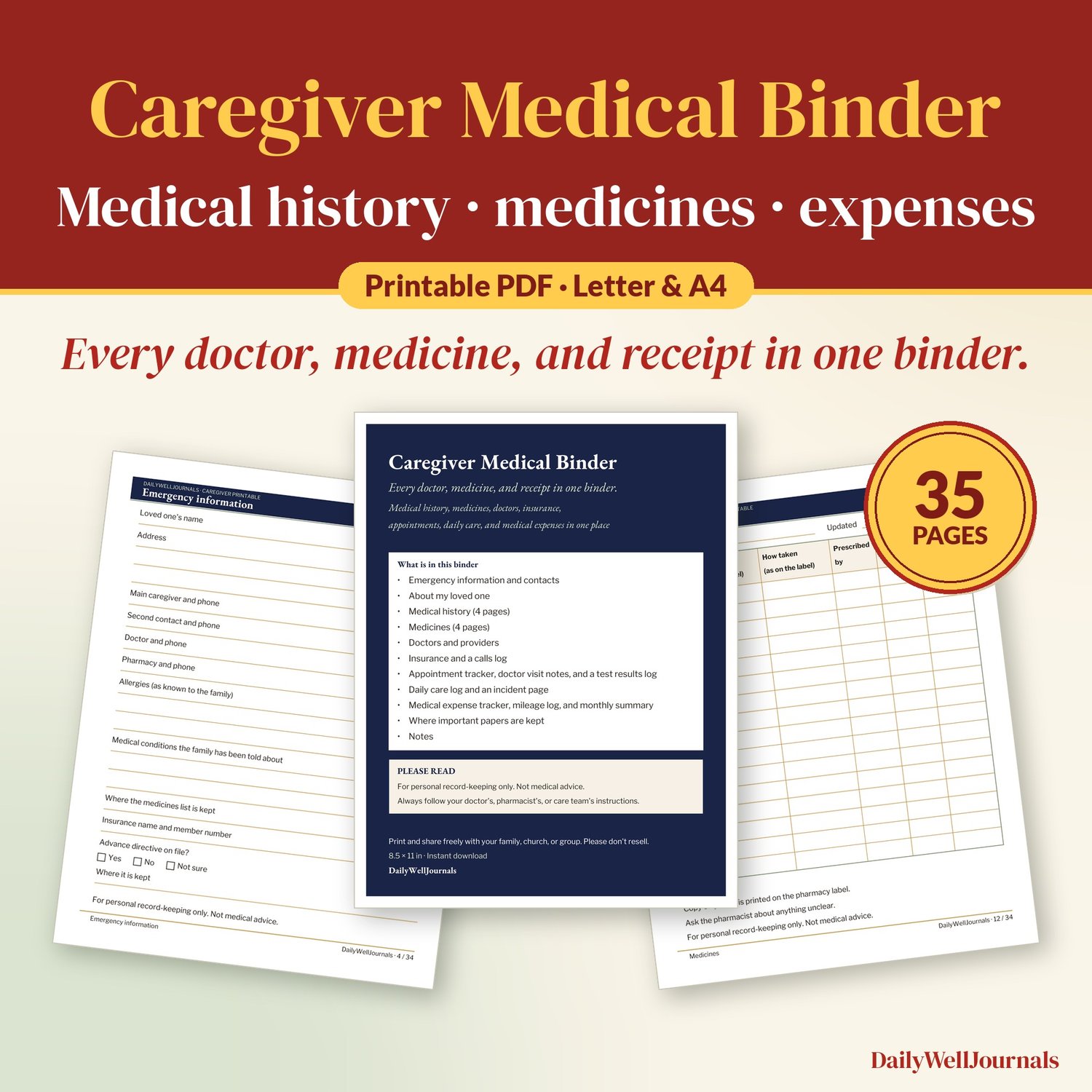
If you'd rather not build every page yourself, our printable binder already has the tabs in this checklist.
Not ready to buy anything? Start with the free emergency information sheet, a real page from the binder that covers the most urgent details. You can also browse every caregiver organizer in the shop.
Frequently asked questions
What should be in a caregiver binder?
An emergency information page, a current medicine list, doctors and pharmacy contacts, insurance details, appointments and visit notes, health history, bills you're checking and a page listing where important papers are kept. Start with emergency information and medicines, then add the rest over time.
Which pages should I fill in first?
Start with the emergency information page and the medicine list. Together they cover most urgent moments, like a trip to the emergency room or a first visit with a new doctor.
Where should I keep a caregiver binder?
Somewhere safe but easy for helpers to find, such as a shelf near the phone or in the kitchen. Tell family members and regular helpers where it is, and bring it to appointments.
How often should I update a caregiver binder?
Update it after every doctor visit or medicine change, and do a quick five-minute check once a week. Every few months, clear out old papers and reprint any full pages.
Should legal documents go in a caregiver binder?
Many families keep a page that lists where documents like a power of attorney or advance directive are kept, and some keep copies in the binder. For questions about the documents themselves, talk with a qualified professional.
Is a paper binder or a digital one better?
Either works. Paper is easy to grab and hand to a helper, while a shared spreadsheet is easier for family in different towns. Many families keep a paper binder for appointments and a spreadsheet for daily logs.
One less thing to carry in your head
A caregiver binder won't make caregiving easy. It can make the hard days a little calmer. The next time someone asks about a medicine or a phone number, you'll know exactly where to look. Start with one page tonight, and let the binder grow as you go.
This article is general information only and isn't medical or legal advice.