Caregiver Organizers
How to organize an aging parent's medical information (without the overwhelm)
A calm, step-by-step way to gather a parent's medicines, doctor visits and papers into one place the whole family can use.
When you start helping an aging parent, the paperwork arrives faster than you expect. There are discharge sheets, medicine lists, insurance letters, appointment cards and a phone number written on the back of a receipt. Before long, important details live in five drawers, three phones and one very tired memory. If that sounds like your kitchen table right now, take a breath. You are not behind, you are just getting started. The good news is that you don't need a perfect system. You need one place to look, and a few habits that keep it current.
Start with one home for everything
Pick a single place where your parent's information will live. For many families that is a simple three-ring binder kept near the phone. Others prefer a shared spreadsheet that siblings can open from anywhere. Either works. What matters is that everyone knows where it is and adds to it in the same way.
Once you've chosen, resist the urge to fill it all in on day one. Write down what you already know, leave the rest blank, and add to it as you go.
Put emergency information first
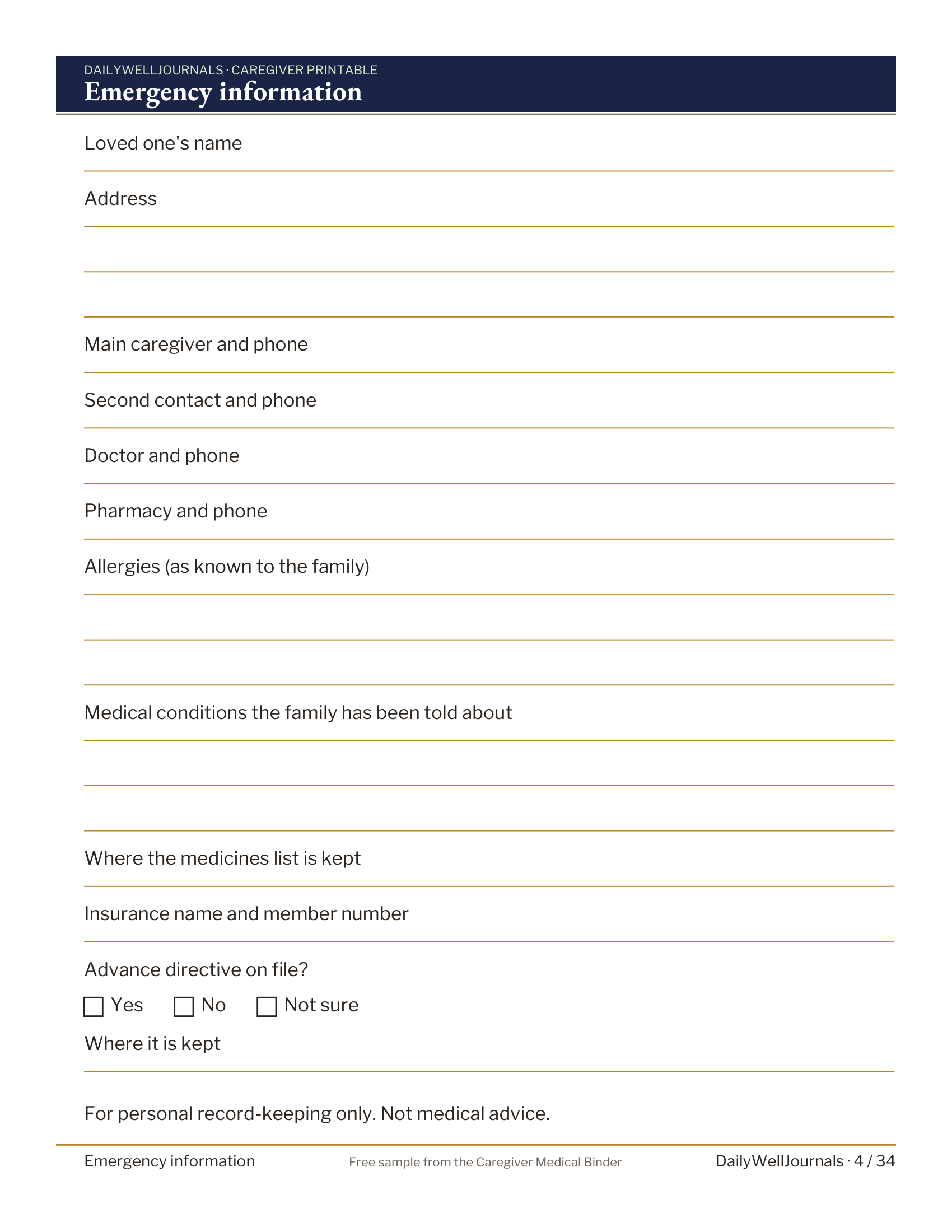
The first page anyone should see is the one they would need in a hurry. Keep it to a single sheet and include:
- Your parent's full name, date of birth and address
- Main family contacts and their phone numbers
- Primary doctor and pharmacy
- Known allergies
- Insurance member number
- Where the current medicine list is kept
Make a copy for the fridge or by the phone. Our Free Printable Emergency Information Sheet for Seniors and Doctor Visit Notes Page includes this page and a doctor visit page, ready to print. If a neighbor, paramedic or new helper steps in, this page answers the first questions without anyone having to call you.
Keep an accurate medicine list
A current medicine list is one of the most useful pages you can keep. Copy each medicine's name, strength and directions exactly as printed on the pharmacy label. Don't shorten or guess. When something changes, note the date and what changed on a separate log so you can see the history later.
If anything on a label is unclear, or you have questions about how medicines work together, ask the pharmacist or doctor. They are the right people to explain it, and they would rather answer a question than have you wonder.
Prepare for each doctor visit
Appointments go quickly, and it's easy to walk out and realize you forgot to ask the one thing that mattered. A simple doctor visit page helps you before, during and after:
- Before: write down questions and anything new you've noticed since the last visit
- During: note what the doctor said, any tests ordered and any medicine changes
- After: record follow-up steps and the date of the next appointment
Keep a running "things to tell the doctor" list between visits too. When something comes up on a Tuesday night, write it down there instead of trying to remember it three weeks later.
Give each kind of paper its own section
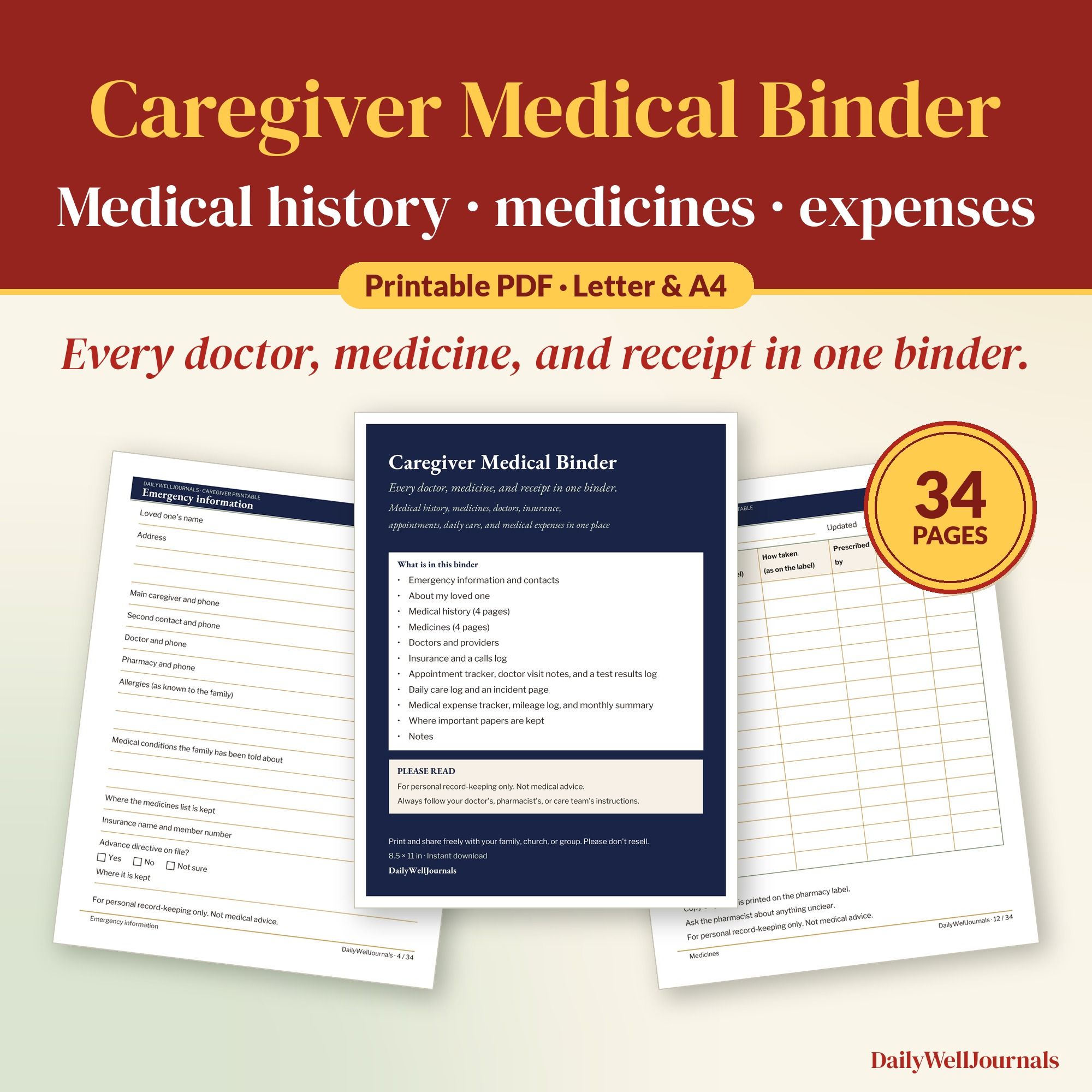
Sorting is easier when every type of record has a set place. A practical binder might include sections for:
- Health history, past surgeries and hospital stays
- Doctors, specialists and other services
- Insurance details and notes from insurance calls
- Appointments and test results
- Daily care notes and any incidents
- Medical expenses and mileage, for your own records
- A list of where important papers are kept
You don't need every section right away. Add them as the need appears.
Share the work with family
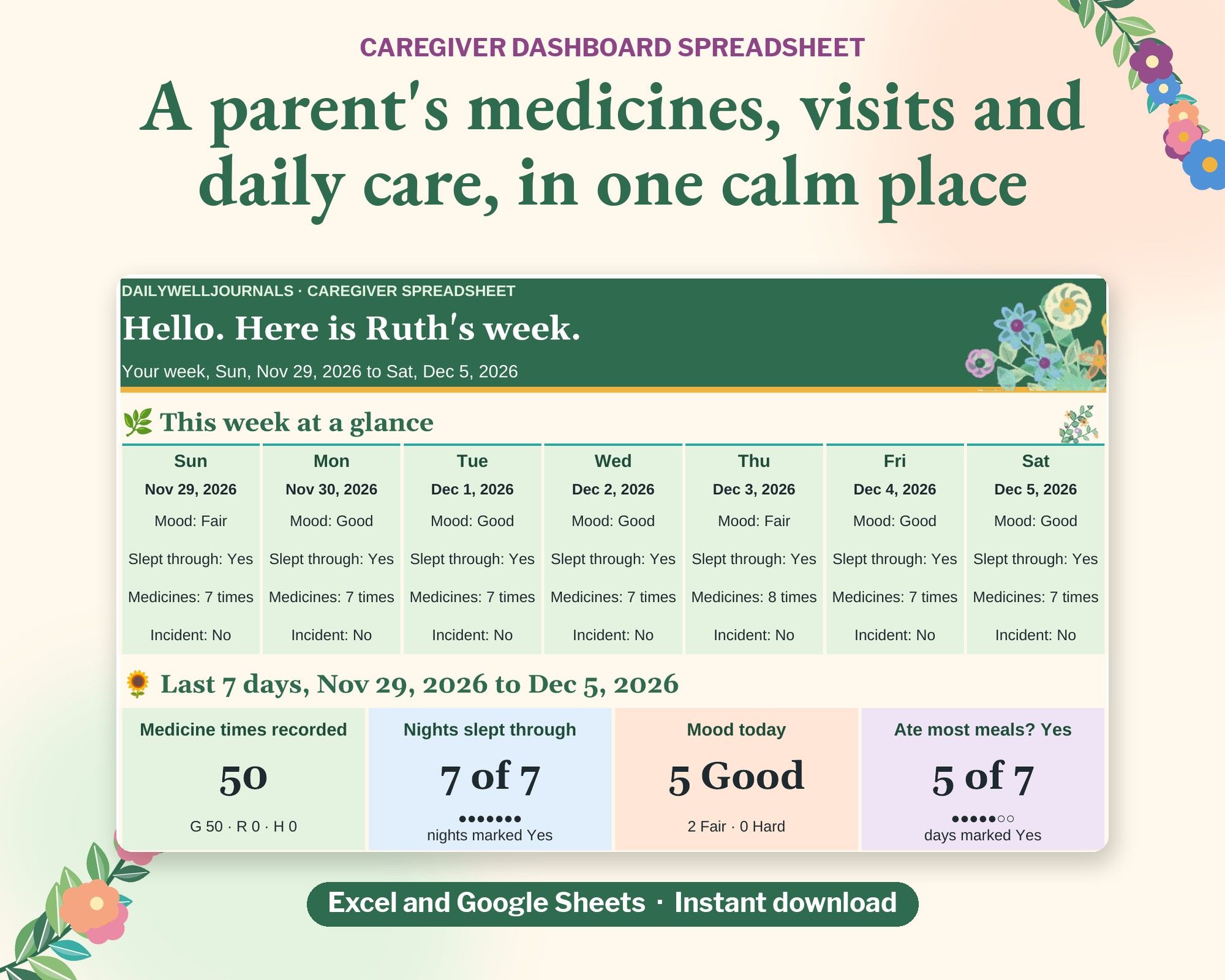
Organizing information is not only about you. It's about making it possible for others to help. When a sibling covers a weekend, they can open the binder or spreadsheet instead of calling you with questions. Ask each helper to add their name or initials to what they record, so everyone can see who noted what. Families spread across different towns often like a shared file such as our Caregiver Medication Log Spreadsheet, Excel and Google Sheets: Appointments, Doctor Summary, which works in Excel or Google Sheets.
Small habits that keep it current
- Set aside ten minutes once a week to file new papers
- Update the medicine list the same day something changes
- Take the binder, or a printed summary, to every appointment
- Review the emergency page every few months
A gentle place to start
If this feels like a lot, begin with just two pages: the emergency information sheet and a doctor visit notes page. Print them, fill in what you know and keep them somewhere easy to find. From there, you can build a full binder or a shared spreadsheet one section at a time.
You are doing important work. A little organization won't make caregiving easy, but it can make the hard days a bit calmer, and that matters.
Helpful tools for this step
- Free Printable Emergency Information Sheet for Seniors and Doctor Visit Notes Page: emergency information and doctor visit pages
- Printable Medical Binder for Elderly Parent: Medication List, Doctors, Insurance, Expenses: every section in this post, ready to print
- Caregiver Medication Log Spreadsheet, Excel and Google Sheets: Appointments, Doctor Summary: one shared spreadsheet for the whole family
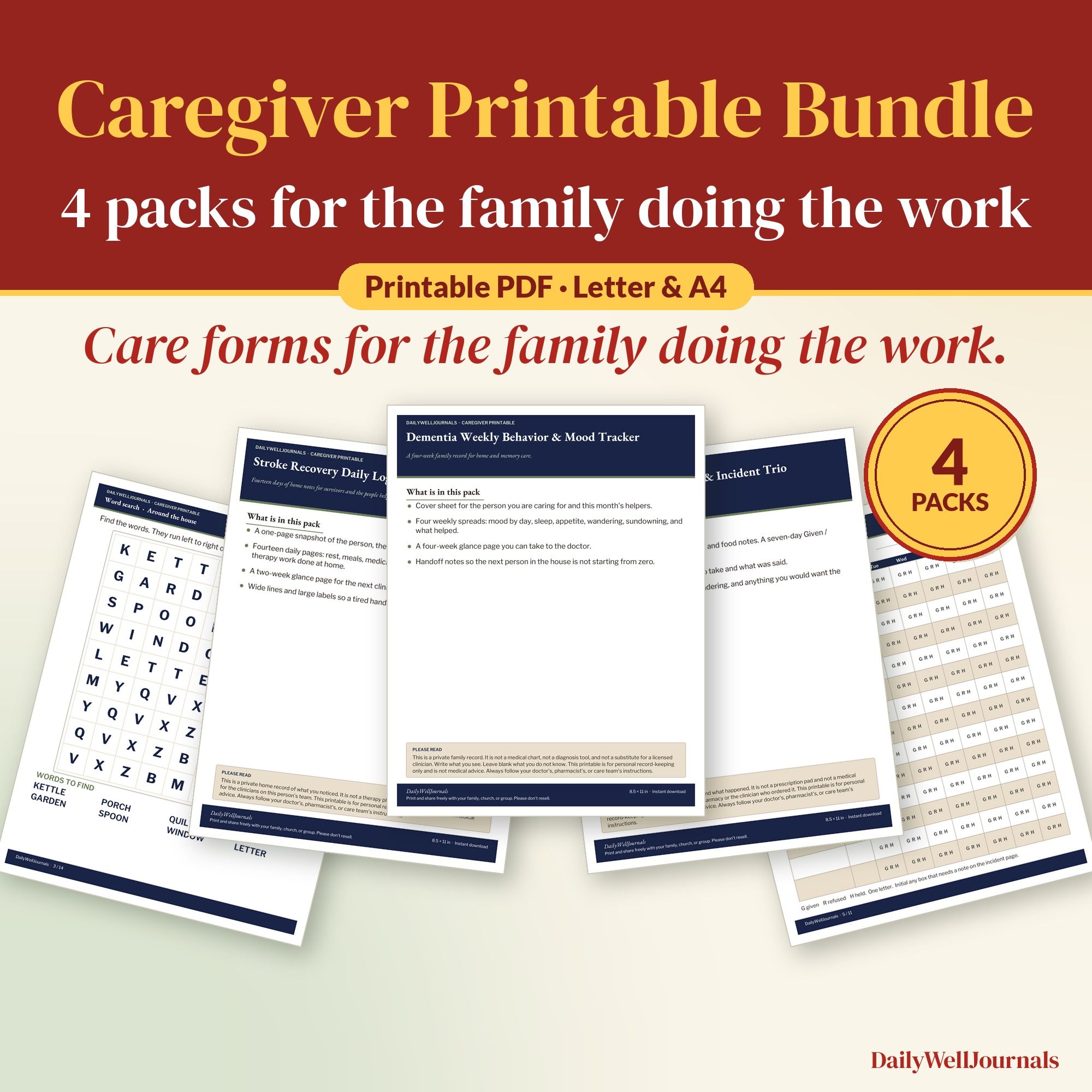
For printed daily records, our Printable Caregiver Forms: Dementia Mood Tracker, Stroke Log, Medication and Incident Logs include medication and incident logs, plus mood and stroke logs.
This article is for general information and personal record keeping. Always follow the guidance of your doctor or pharmacist.