Apps
How to Read an EOB (Explanation of Benefits), Line by Line
Quick answer: To read an EOB, start at the top with the patient, provider and date of service. Then follow each service line from left to right: amount billed, plan discount or adjustment, allowed amount, what the plan paid, and patient responsibility. That last number is what you may owe. An EOB is not a bill.
An Explanation of Benefits can look like it was written to confuse. There are columns of numbers, unfamiliar terms and codes at the bottom of the page, and it arrives right when you're already juggling appointments and worry. If you're reading one for yourself or a parent and feeling lost, we understand. Most people do at first.
Most EOBs follow the same basic pattern. Once you know what each part means, you can read one in a few minutes. This guide walks through it line by line.
This article is general information to help you understand the document. It isn't insurance, legal or financial advice. Contact your insurer for questions about your coverage.
What is an EOB?
An EOB is a statement from a health plan that explains how it handled a claim. After a doctor, hospital, lab or other provider sends a claim, the plan processes it and sends an EOB by mail or posts it in your online account. It shows what was billed, what the plan allowed, what it paid and what may be left for the patient.
Every insurer designs its EOB a little differently, and column names vary. The ideas underneath are almost always the same.
Is an EOB a bill?
No. An EOB usually says "This is not a bill" right at the top. The bill comes separately from the provider. The EOB is your reference for checking that bill. In most cases, the amount due on the provider's bill should match the "patient responsibility" or "you may owe" amount on the matching EOB.
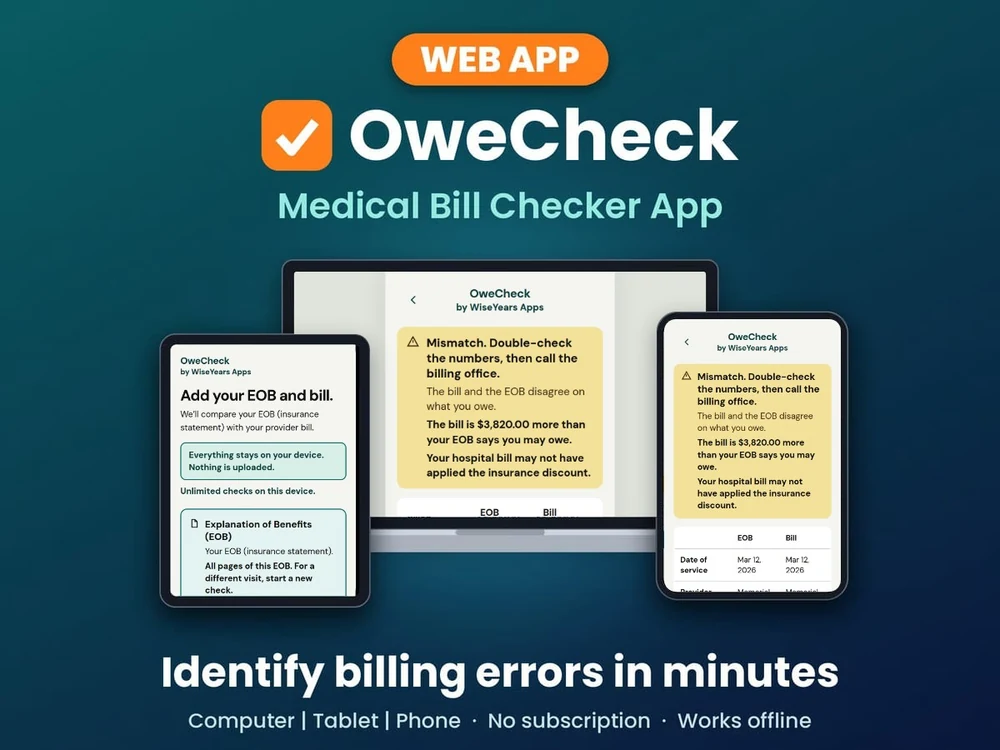
When a bill arrives, compare it to the EOB for the same date of service before you pay. Our guide on how to check a medical bill against your EOB walks through that comparison and includes a short EOB abbreviations glossary. OweCheck can line the two papers up in your browser. It is a personal checking tool, not legal, medical or insurance advice.
What do "allowed amount," "adjustment" and "patient responsibility" mean?
Here are the terms you'll see most often, roughly in the order they appear.
The top section
- Member or patient: who received care. On a family plan, check that it's the right person.
- Member ID and group number: the numbers from the insurance card.
- Claim number: the reference for this claim. Write it down for any phone call.
- Provider: the doctor, hospital or lab that sent the claim.
- Date of service: the day the care happened, not the day the EOB was printed.
The service lines
- Service or description: what was done, sometimes with a procedure code.
- Amount billed (or charged): the provider's full price before any discounts.
- Adjustment (or discount, network savings): the amount taken off because of the plan's agreement with the provider. In-network patients generally aren't asked to pay this part, but your insurer can confirm how it applies to you.
- Allowed amount: the price the plan recognizes for the service. It's usually much lower than the amount billed.
- Not covered: any amount the plan didn't count, often with a remark code that explains why.
- Plan paid: what the insurance paid the provider.
- Deductible: the part of the allowed amount applied to the yearly deductible.
- Copay: a set dollar amount for a type of visit.
- Coinsurance: a percentage of the allowed amount, such as 20%.
- Patient responsibility (or "you may owe"): the total of deductible, copay, coinsurance and any not-covered amount. This is the number to compare with the provider's bill.
A worked example
Here's what two lines might look like for an office visit and a lab test. The numbers are made up, and your EOB's columns may be named differently.
| Service | Billed | Adjustment | Allowed | Plan paid | Deductible | Coinsurance | You may owe |
|---|---|---|---|---|---|---|---|
| Office visit | $250.00 | $110.00 | $140.00 | $112.00 | $0.00 | $28.00 | $28.00 |
| Lab test | $180.00 | $120.00 | $60.00 | $0.00 | $60.00 | $0.00 | $60.00 |
| Total | $430.00 | $230.00 | $200.00 | $112.00 | $60.00 | $28.00 | $88.00 |
Read across each row: billed minus adjustment equals allowed. Then the allowed amount is split between what the plan paid and what the patient may owe. For the office visit, $140 allowed = $112 plan paid + $28 coinsurance. For the lab test, the deductible wasn't met yet, so the full $60 allowed went to the deductible. In this example, the provider's bill should show about $88, not $430.
How to read an EOB in seven steps
- Check the top: right patient, right provider, a date of service you recognize.
- Find the claim number and write it down.
- Go line by line: does each service look familiar?
- Follow each row left to right: billed, adjustment, allowed, plan paid, patient share.
- Look for notes or codes next to any line, then find their meaning in the key.
- Find the total patient responsibility. That's the number to compare with the bill.
- File it with a note: "Waiting for bill," "Matches bill, paid" or "Question, called on [date]."
What do denial or remark codes mean in general?
Next to some lines you may see a short code, like a letter and number. These are remark or reason codes. They point to a short explanation, usually printed in a key at the bottom or on the back of the EOB. Each insurer words them a little differently, but they often fall into a few general groups:
- Applied to deductible, copay or coinsurance: the claim was processed and part of it is the patient's share.
- Not covered under the plan: the plan doesn't include this service, or doesn't include it in this situation.
- More information needed: the plan is waiting on details from the provider or the patient.
- Duplicate claim: the plan already received a claim for this service.
- Out of network: the provider isn't in the plan's network, which can change what's paid.
- Authorization: the plan expected approval before the service.
A code doesn't always mean something went wrong. Sometimes a provider just needs to resend a claim with a correction. If a code isn't clear, call the member services number on the card and ask them to explain it in plain words. The EOB usually also describes how to ask for a review of a decision, and your insurer can walk you through those steps.
How do you keep EOBs organized?
- One folder per person. If you handle papers for both parents, keep them separate. Our guide on how to organize an aging parent's medical information shows how to give everything one home.
- Sort by date of service, not by the date the EOB arrived. That's how you'll match them to bills.
- Keep the EOB and its bill together once the bill arrives, stapled or in the same digital folder.
- Download from the portal. Many plans post EOBs online as PDFs. Save them with clear names like "2026-11-03 Clinic EOB."
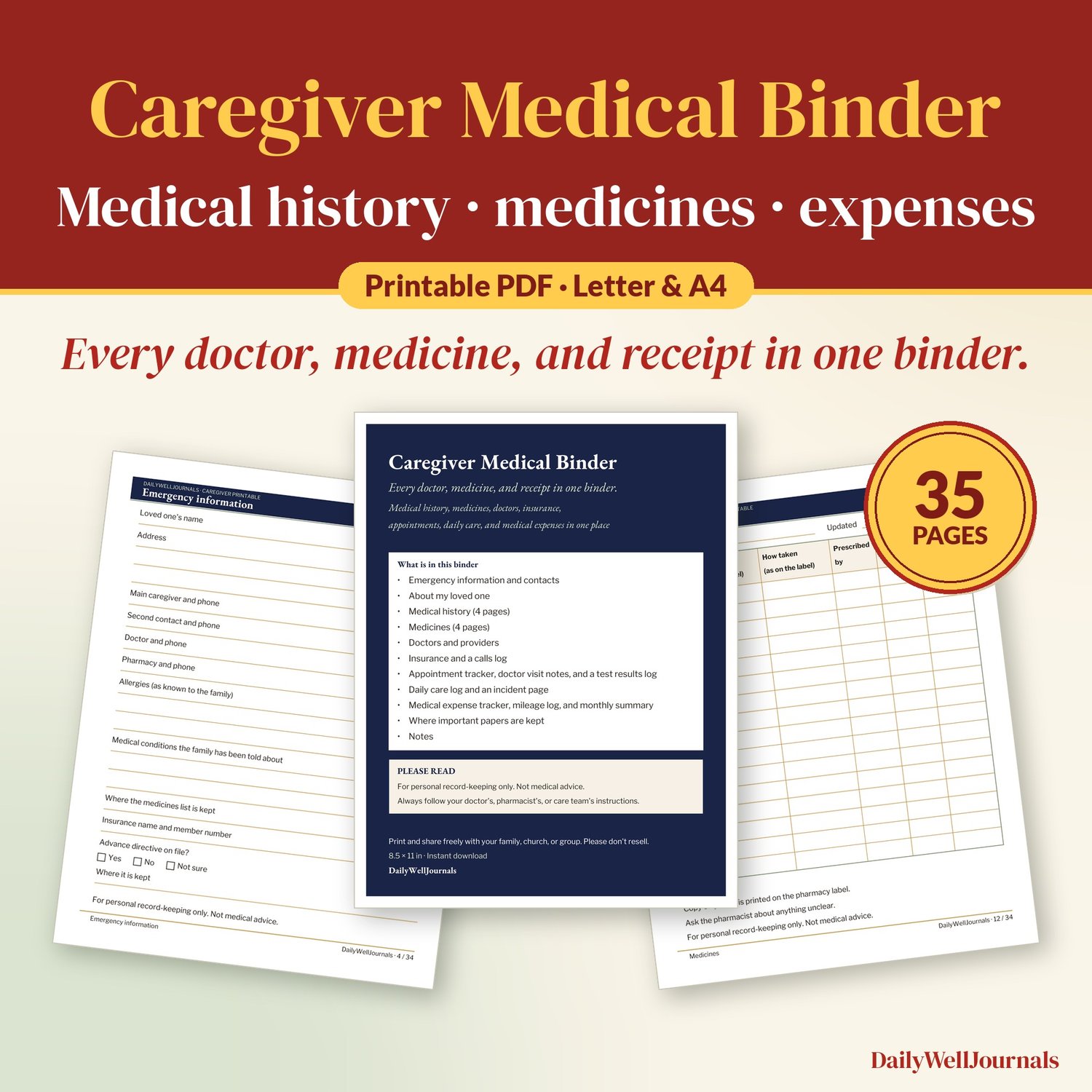
- Log your calls with the date, who you spoke with and any reference number. The insurance calls log in our printable medical binder has space for this.
Let OweCheck do the comparing
Once you can read an EOB, the next step is checking it against the bill. That takes focus, and caregivers rarely have any to spare. OweCheck was made for that moment.
Frequently asked questions
Do I pay from my EOB?
No. You pay from the provider's bill, not the EOB. The EOB explains how your health plan processed the claim, so use it to check that the amount on the bill matches what the plan says you may owe.
Why is the allowed amount lower than the amount billed?
Providers often list a full price, and health plans have agreed prices with in-network providers. The difference usually shows as an adjustment or discount. Your insurer can explain how this applies to your plan.
What does patient responsibility mean on an EOB?
It's the part of the allowed amount that may be left for the patient to pay, such as a deductible, copay, coinsurance or a not-covered amount. It's the number to compare with the provider's bill.
Why did I get an EOB if I don't owe anything?
Plans send EOBs for processed claims even when the patient owes nothing. It's still worth keeping, since it shows the service was billed and paid.
What should I do if my EOB says a claim was denied?
Read the remark code and its explanation in the key. Then call the member services number on the insurance card for a plain explanation, and ask the provider's billing office whether they need to resend the claim. The EOB usually explains how to ask for a review.
Can I read EOBs for my parent?
Often, yes, with their permission. Insurers usually ask for a signed authorization before they discuss a member's claims with family. Ask the plan what form they use.
One line at a time
An EOB doesn't have to be a mystery. Check the top, read each line from left to right, and find the patient responsibility. When something doesn't make sense, it's always fine to call and ask. This is careful work, and it's fine to take it one envelope at a time.
This article is general information only and isn't insurance, legal or financial advice.