Caregiver Organizers
Year-End Medical Bill Cleanup: How to Organize Medical Bills and EOBs Before Tax Season
Quick answer: To organize medical bills at year-end, gather every bill, EOB, receipt and payment record for the year. Sort them by person and date of service, then match each bill to its EOB. Mark each pair paid, open or questioned, and keep paper and digital copies in one place with a simple yearly summary.
By December, medical paperwork piles up. There's a stack on the counter, a few envelopes in the car, some EOBs in an online portal you haven't opened in months, and a nagging feeling that one bill slipped through. If you're handling this for a parent and your own household, we understand. It can feel like a second job.
A year-end cleanup doesn't need to be perfect or done in one sitting. A few evenings in December can turn the pile into a clear record, show you which bills are still open and leave you ready for the new year.
This guide is general information about organizing paperwork. It isn't tax, insurance, legal or financial advice. Ask a tax professional whether any medical expenses are deductible for you, and contact your insurer with coverage questions.
Why organize medical bills at year-end?
- Many deductibles reset. On many health plans, the deductible and out-of-pocket totals start over on January 1. It helps to know where you stand before they do.
- Questions are easier while they're recent. Billing offices can usually answer questions faster about a recent visit than one from last spring.
- Tax season is coming. If you or a tax professional will look at medical expenses, a sorted file saves hours later.
- Some accounts have deadlines. If you use a flexible spending account or a health savings account, check your plan's dates for claims and receipts.
- Peace of mind. Knowing nothing is lost in the pile is worth a lot.
What documents should you gather?
Pick one box, basket or folder and put everything for the year in it before you start sorting:
- Bills and statements from doctors, hospitals, labs, imaging centers and therapists
- EOBs from each health plan, including any you can download from the online portal
- Pharmacy receipts or a yearly prescription summary, which many pharmacies can print
- Payment records: receipts, bank or card statements, and confirmation emails or numbers
- Receipts for medical supplies and equipment
- Mileage notes for medical trips, if you keep them
- FSA or HSA statements and claim confirmations
- Any year-end statements or tax forms your health plan or account provider sends
- Your notes from phone calls with billing offices or the insurer
How do you match each bill to its EOB?
Matching is the main job. Work on one person at a time.
- Sort bills by date of service. Use the date the care happened, not the date the bill was mailed.
- Sort EOBs the same way. Now the two stacks are in the same order.
- Pair them up. For each bill, find the EOB with the same patient, provider and date of service.
- Compare the amounts. The amount due on the bill should usually match the "patient responsibility" or "you may owe" on the EOB.
- Mark each pair as Paid, Open or Question, and staple or clip them together.
- Set aside the loners: bills with no EOB, and EOBs with no bill yet.
If the EOB terms are unfamiliar, start with how to read an EOB line by line, which explains each column in plain words. Then how to check a medical bill against your EOB walks through the comparison.
How do you spot bills that are still open?
After matching, look for these signs that something isn't finished:
- A bill with no EOB. The claim may not have been sent to insurance yet, or may still be processing.
- An EOB marked pending or "more information needed." The claim isn't done.
- Amounts that don't match. The bill asks for more than the EOB says you may owe.
- A balance after you paid. A new statement still shows money due.
- An EOB with patient responsibility but no bill. A bill may still be on its way.
A one-page tracker makes the open items easy to see. Here's an example with made-up entries:
| Date of service | Provider | Bill amount | EOB: you may owe | Paid | Status |
|---|---|---|---|---|---|
| Feb 12 | Family clinic | $35.00 | $35.00 | $35.00 on Mar 3 | Done |
| May 6 | Imaging center | $612.00 | $148.00 | No | Question: bill doesn't match EOB |
| Aug 21 | Lab | None yet | $42.00 | No | Waiting for bill |
| Oct 9 | Hospital outpatient | $275.00 | No EOB yet | No | Open: call insurer about claim |
| Nov 30 | Physical therapy | $60.00 | $60.00 | $60.00 on Dec 8 | Done |
For any line marked Question or Open, call the billing office or insurer, note the date, the person you spoke with and any reference number, and update the tracker.
How should you file paper and digital copies?
- Pick one system and stick with it. A folder for each person with tabs by month works well for paper.
- Scan or photograph paper you want to keep digitally, and save it as a PDF.
- Name files consistently, such as "2026-05-06 Imaging center bill.pdf" and "2026-05-06 Imaging center EOB.pdf," so they sort side by side.
- Keep one folder per year on your device or in cloud storage, with a subfolder for each person.
- Make a one-page yearly summary with totals for bills, insurance payments and what you paid.
- Back it up somewhere safe, and keep the paper folder with your other important records.
How long to keep each document depends on your situation. A tax professional can tell you what to hold onto and for how long.
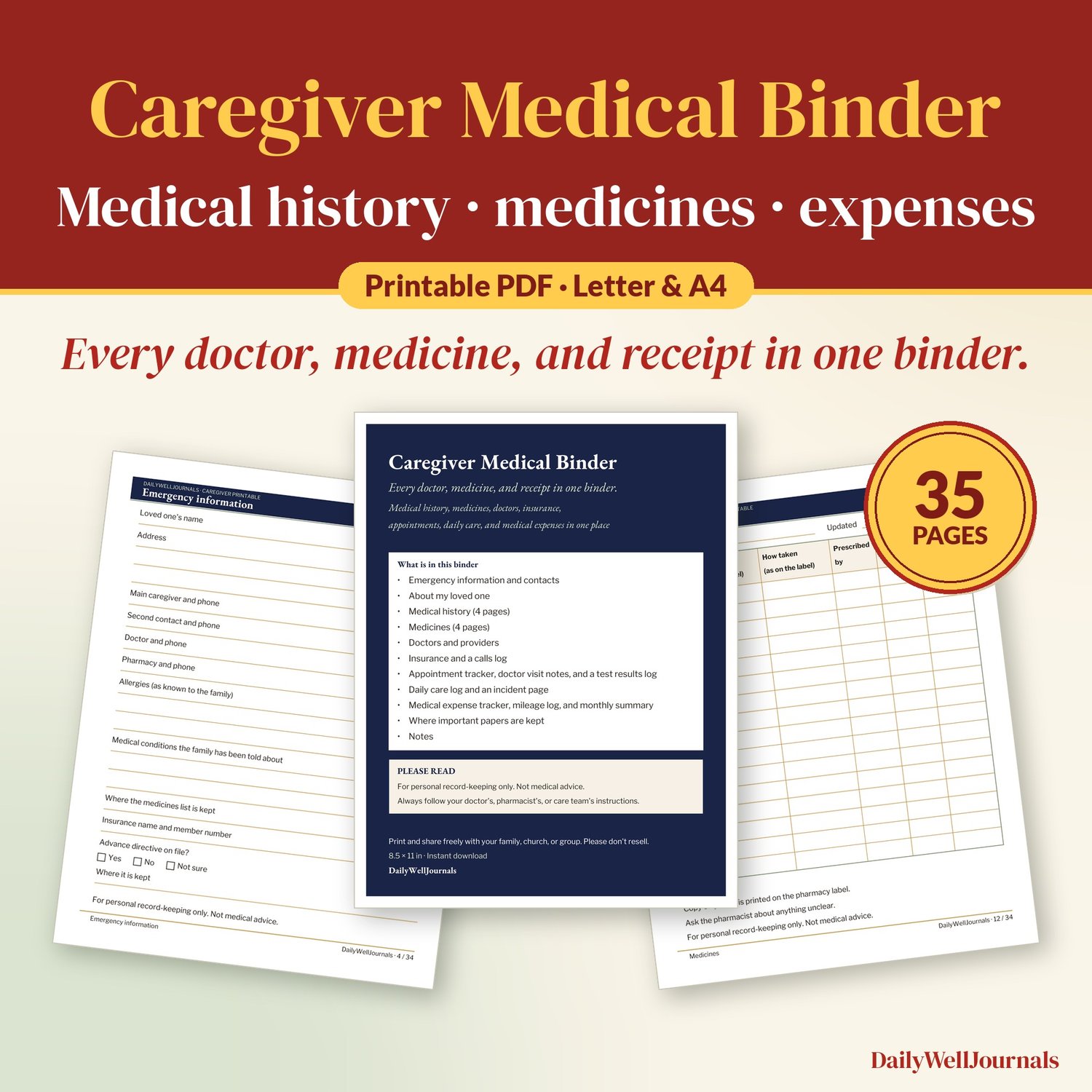
If you prefer paper, the medical expense tracker, mileage log and monthly summary pages in our Printable Medical Binder give the year a tidy home, along with an insurance calls log for those follow-up phone calls.
Should you check each bill before you pay it?
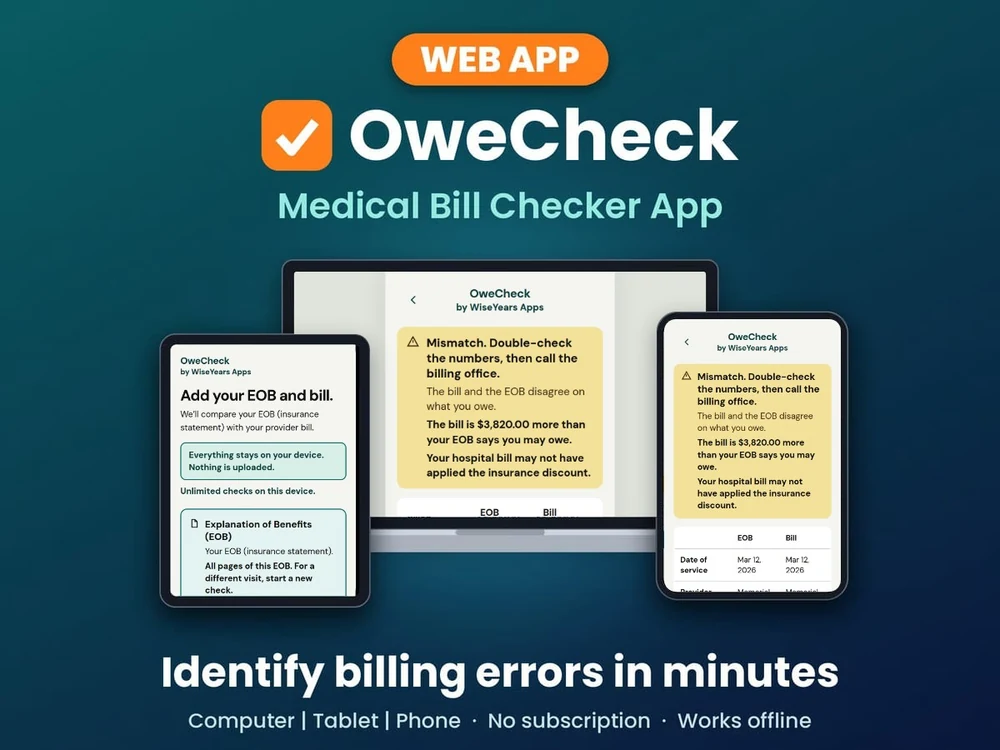
The slowest part of a cleanup is comparing each bill to its EOB. OweCheck can help with that step, now and into the new year.
Frequently asked questions
How do I organize medical bills and EOBs for the year?
Gather every bill, EOB, receipt and payment record in one place. Sort by person and date of service, match each bill to its EOB, mark each pair paid, open or questioned, and file paper and digital copies with a one-page yearly summary.
Are medical bills tax deductible?
It depends on your situation and current tax rules. Ask a tax professional whether any of your medical expenses are deductible. Keeping organized records makes that conversation easier.
How long should I keep medical bills and EOBs?
It depends on how you use them. A tax professional can tell you how long to keep records for taxes, and your insurer can tell you how long claims can be reviewed.
Should I pay a medical bill before the EOB arrives?
Many people find it helpful to wait for the EOB so they can compare the amounts first. If a due date is coming up, call the billing office, let them know you're waiting for the EOB and ask about their options.
What if a medical bill arrives months after the visit?
Find the EOB for that date of service and compare the amounts, just as you would with a recent bill. If there's no EOB, call the insurer to ask whether the claim was received.
How do I organize medical bills for two parents?
Keep a separate folder and tracker for each person. Bills and EOBs for different people are easy to mix up, especially when both parents see the same doctor.
A fresh start for the new year
You don't have to clear the whole pile tonight. Start with one person and one month. Match what you can, mark what's open and come back to it another evening. By January, you'll know where things stand. That's a real gift to give yourself.
This article is general information only and isn't tax, insurance, legal or financial advice.