Apps
How to Split Caregiving Costs With Siblings: A Fair Way to Track Who Paid What
How to split caregiving costs with siblings: what to track, how to choose a fair share and a calm way to settle up, so money never gets in the way of caring for a parent.
Your mom's copay was $40. The gas for three trips to the specialist added up. Someone bought the shower chair, and someone else picked up groceries twice this week. A few months later, nobody remembers who paid for what, and a simple question at the holiday table turns tense.
Caring for a parent is already heavy. Money confusion between siblings makes it heavier. Here is a calm, fair way to track care costs and share them, so the talk stays about your parent and not about receipts.
Start with one place for every cost
Receipts in a purse, a note on the fridge and a text to a sister do not add up to a record. Choose one home for care costs, such as a notebook, a spreadsheet or an app, and agree that every helper uses it.
Keep the habit small. Write the cost down the day it happens, even if it is only a date, an amount and a few words. A quick entry beats a perfect one you never get to.
Decide what counts as a care cost
Families get stuck when each person has a different idea of what belongs on the list. Talk it through once, and write the answer down. Common categories include:
- Medical costs: copays, prescriptions, hearing aid batteries and supplies
- Home changes: grab bars, a shower chair, a ramp
- Daily needs: groceries, meals delivered, cleaning help
- Care services: adult day programs, respite care, a helper for a few hours
- Travel: gas and miles driven to appointments and errands
If something is unclear, such as a gift or a shared dinner, decide together and note the choice. It saves an argument later.
Record money paid back, too
Sometimes insurance or another person pays part of a cost back. Note that next to the original entry, so the record shows what you really paid out of pocket. It also helps to tick whether you kept the receipt, so you know where to look if a question comes up.
Count the trips
Driving a parent to appointments adds up faster than most people expect. Write down the date, where you went and how many miles. A mileage list is easy to keep and easy to share with the family.
Pick a fair split, and say it out loud
"Fair" does not always mean equal. One sibling may live next door and give hours every week. Another may live far away and cover more of the money. Some families split costs evenly. Others split by income, or by who does what.
Sit down together, choose a way that feels right to everyone and write it down. Then look at the totals every month or two. A short, regular check-in keeps small gaps from turning into big feelings.
Settle up in small steps
When one person pays for most things, the others can pay their share a little at a time. Seeing who owes whom in plain numbers takes the guesswork out of it. Pay when you say you will, and say thank you. Your parent notices how the family treats each other.
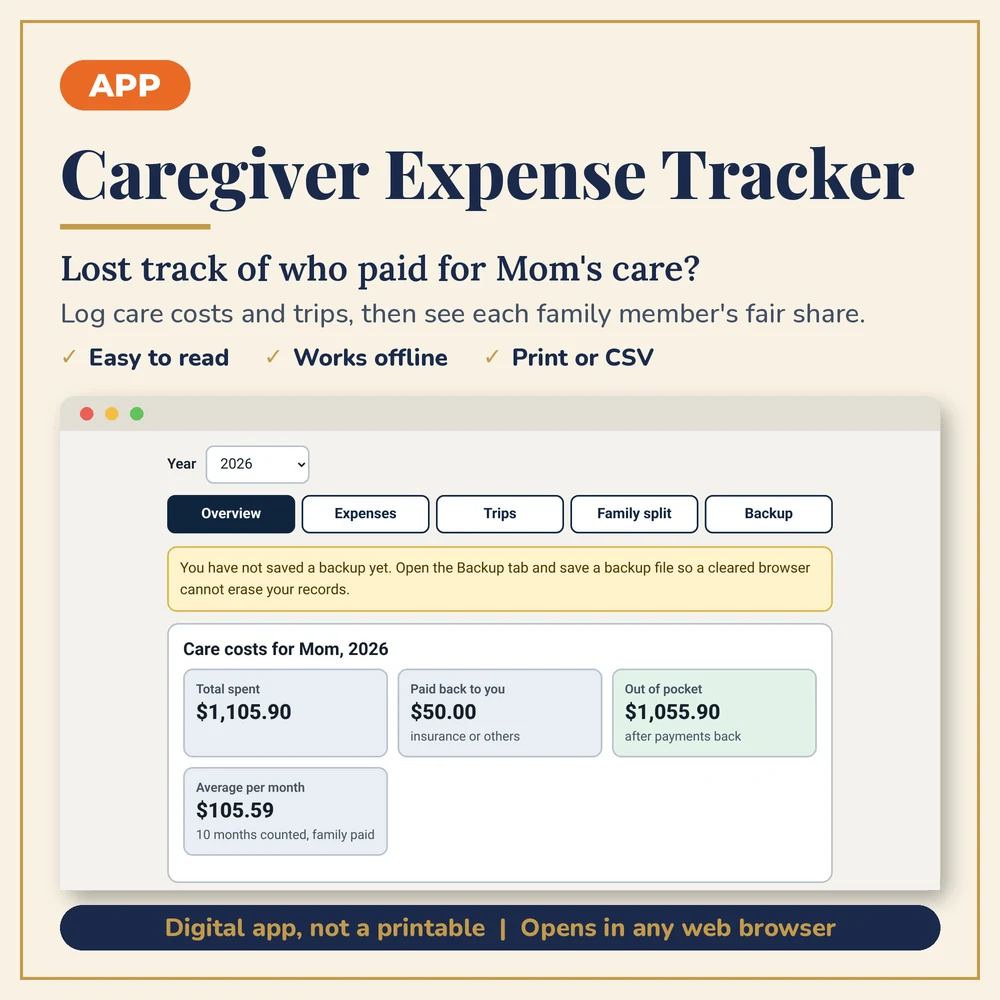
If you want help with this, the Caregiver Expense Tracker keeps care costs and care trips in one place, then shows each person's share and who owes whom. It is easy to read, runs in your web browser on any device, works offline and keeps your entries on your device.
Keep papers where the whole family can find them
Costs are only one piece of the paperwork. If you have not set up a central place for your parent's other records, our caregiver binder checklist shows what to include. If you are just getting started, the first-month checklist for new caregivers can help you take it one step at a time.
Give yourself some grace
You will forget to write something down. A receipt will go missing. That is all right. Pick the record back up today and keep going. A record with a few gaps is still far better than none.
What matters is that your parent is cared for and that you all stay on good terms. Keeping the money clear makes that a little easier.
Helpful tools for this step
- Caregiver Expense Tracker: log care costs and trips, set each person's share and see who owes whom.
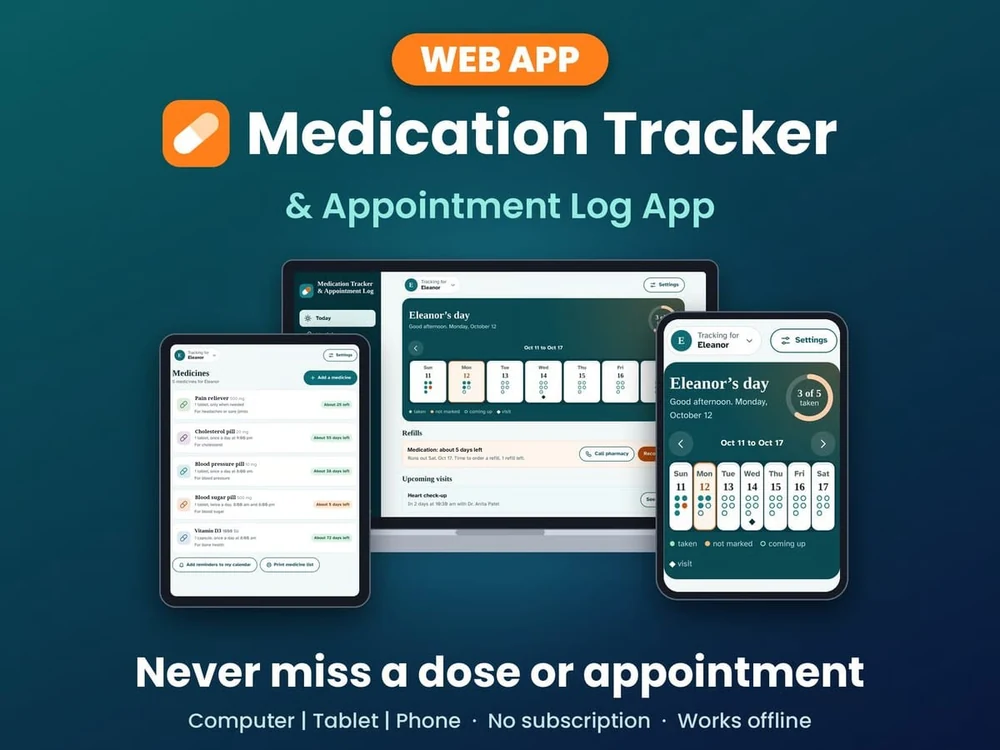
- Medication Tracker: an easy-to-read way to keep a parent's medicine list and refill dates in one place.
This article is for general information and personal record keeping. It is not tax, legal or financial advice. Ask a tax professional which costs apply to you.