Caregiver Organizers
Caring for an aging parent: a gentle first-month checklist for new caregivers
New to caring for a parent? Walk through the first four weeks one step at a time, from a single home for information to taking care of yourself.
Maybe it was a fall, a hospital stay or a phone call from a neighbor. However it started, you are now helping care for your mom or dad, and the to-do list showed up all at once. If you feel a little lost, you are in good company. Most family caregivers never planned for this role. They simply said yes because they love someone.
The first month does not need to be perfect. It needs a few steady steps that give you a clearer picture and a little more calm. Here is a simple checklist to walk through, one week at a time.
Week 1: Take a breath and look around
Before you change anything, spend a few days simply noticing. Visit at different times of day if you can. Watch how your parent moves through the house, how meals happen and how they seem in the morning compared with the evening.
Write down what you see, without judging it:
- Daily routine: when they wake, eat, rest and go to bed
- Home safety: loose rugs, dim stairways, a hard-to-reach bathroom
- Help already in place: neighbors, church friends, a cleaning service
- What they still enjoy: a favorite show, a morning walk, a crossword
That last item matters more than it seems. Caregiving goes better when it starts with who your parent still is, not only with what has changed.
Week 1: Start a single home for information
In the first days you will collect phone numbers, discharge papers, insurance letters and sticky notes. Choose one place for all of it right away, such as a three-ring binder by the phone or a shared spreadsheet your siblings can open.
Begin with just two pages:
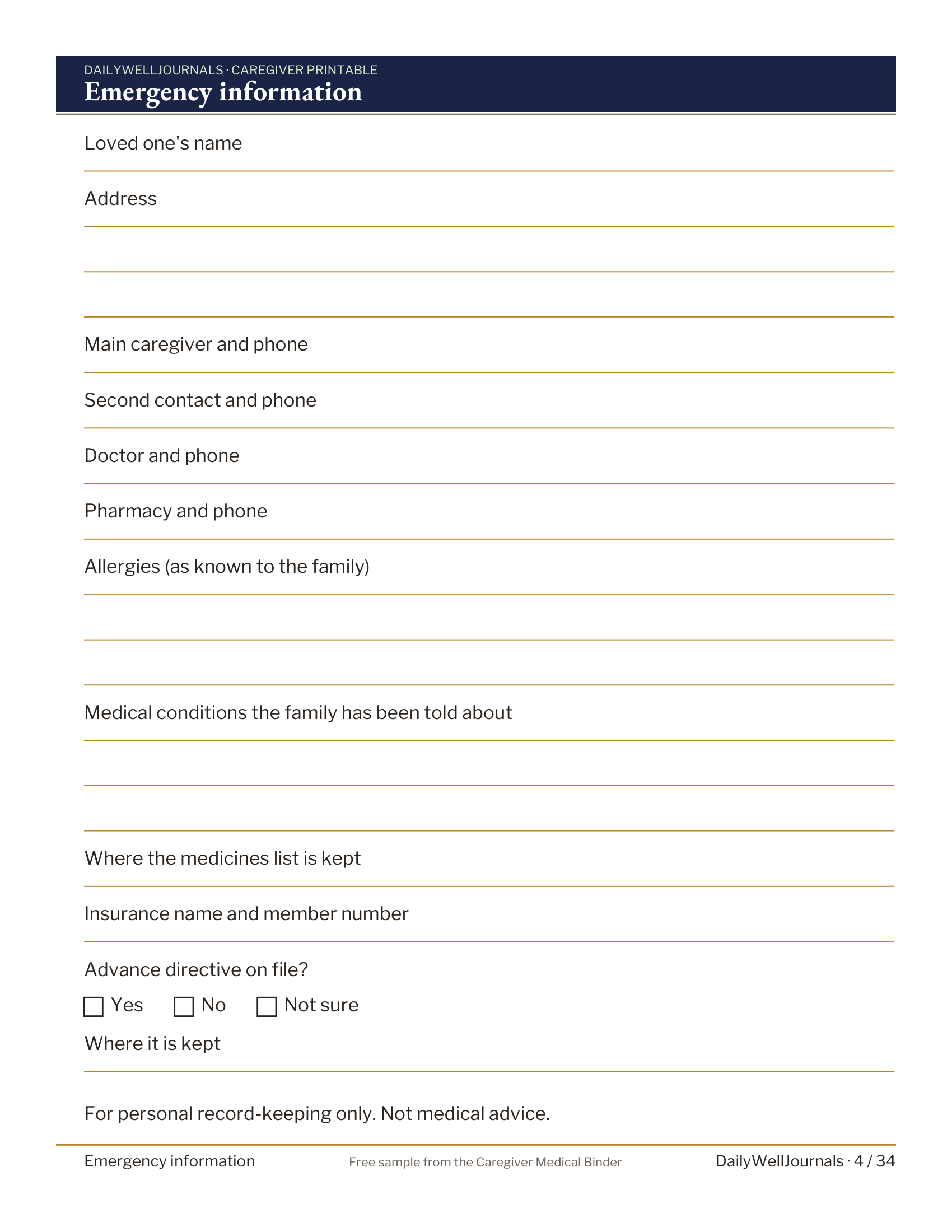
- An emergency information sheet: full name, date of birth, allergies, main contacts, primary doctor, pharmacy and insurance number
- A doctor visit page: questions before the visit, notes during it and follow-up steps after
If you would like a head start, our Free Printable Emergency Information Sheet for Seniors and Doctor Visit Notes Page has both of these pages ready to print. Fill in what you know today and leave the rest blank.
Week 2: Gather the medicine list
A current medicine list is one of the most useful pages you will ever keep. Gather every bottle and box into one spot, including vitamins, supplements and over-the-counter items. Then copy each one exactly as printed on the label:
- Name and strength
- Directions, word for word
- Who prescribed it
- The pharmacy that fills it
Do not shorten or guess. If something on a label is unclear, take the list to the pharmacist and ask. Pharmacists are glad to review a full list, and they are the right people to explain how medicines work together. Write a "last updated" date at the top so no one relies on an old copy.
Week 2: Learn who is on the care team
Make a simple contact list of everyone involved in your parent's care. Include each doctor and specialist, the pharmacy, any home health or therapy services, and the insurance company's member services number.
Ask your parent which doctor they trust most, and plan to go with them to the next appointment. You will learn a great deal just by listening. Bring your doctor visit page and a short list of questions so nothing important slips away in the rush of the exam room.
Week 3: Have the gentle conversations
Some of the most important caregiving work is talking, not doing. When the time feels right, ask your parent about their wishes:
- Who would they like to make decisions if they cannot?
- Where are important papers kept, such as a will or power of attorney?
- What matters most to them about daily life at home?
These conversations can feel heavy. Keep them short, choose a calm moment and let your parent lead. You do not have to cover everything at once. If legal or financial questions come up, write them down for an attorney or financial advisor.
Week 3: Share the load with family
You were not meant to carry this alone. Call a short family meeting, in person or by video, and share what you have learned so far. Then divide the work by strengths:
- The organizer keeps the binder or spreadsheet up to date
- The nearby sibling handles rides and drop-in visits
- The faraway sibling takes insurance calls or orders supplies online
- Everyone signs or initials what they record, so notes are clear
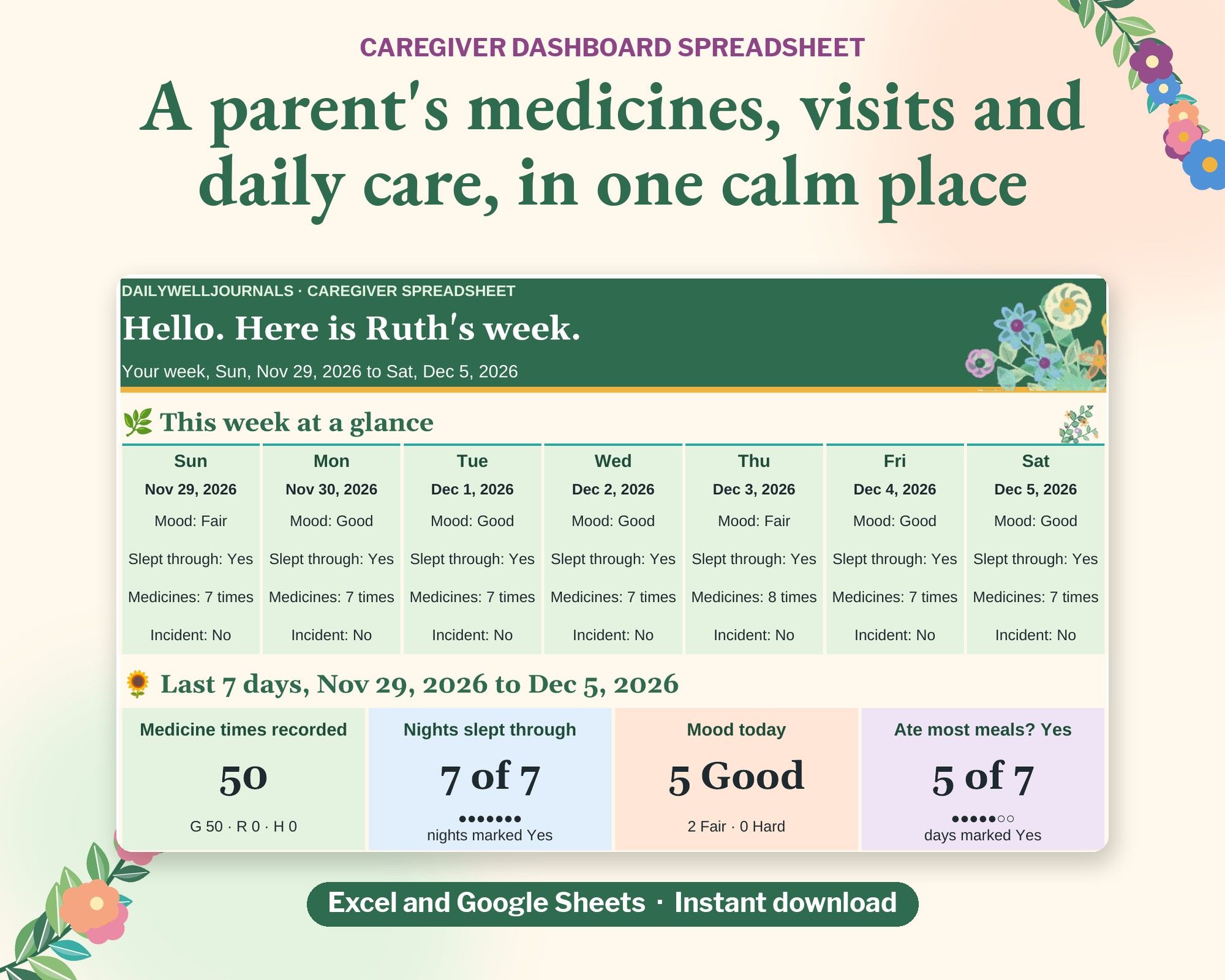
A shared tracker keeps everyone on the same page. Some families use a printed binder; others like a spreadsheet such as our Caregiver Medication Log Spreadsheet, Excel and Google Sheets: Appointments, Doctor Summary, which keeps medicines, appointments and daily notes in one file that works in Excel or Google Sheets.
Week 4: Build a simple daily rhythm
By now you have a better sense of what a good day looks like for your parent. Put a light routine around it. A daily care log with a few lines for meals, rest, mood and anything new you noticed takes only minutes, and it becomes a helpful record to bring to the next appointment.
Add something good to each day as well. Large print word searches, a puzzle at the kitchen table or a favorite hymn played after lunch can turn time together into more than tasks.
Week 4: Take care of the caregiver
This is the step most new caregivers skip, and it is the one that keeps you going. Ask yourself honestly, "How am I, really?"
- Protect one small break each day, even fifteen minutes
- Keep your own doctor appointments
- Say yes when someone offers to help, and give them a specific task
- Find one person you can talk to openly, whether a friend, pastor or support group
Caring for yourself is not selfish. It is how you keep caring for someone else.
You are doing better than you think
At the end of the first month, look back at what you have built: one place for information, a current medicine list, a care team you know by name and family members who are sharing the load. That is real progress. There will still be hard days, and that is alright. Little by little, you are learning, and your parent is blessed to have you.
Helpful tools for this step
- Free Printable Emergency Information Sheet for Seniors and Doctor Visit Notes Page: emergency information and doctor visit pages, ready to print
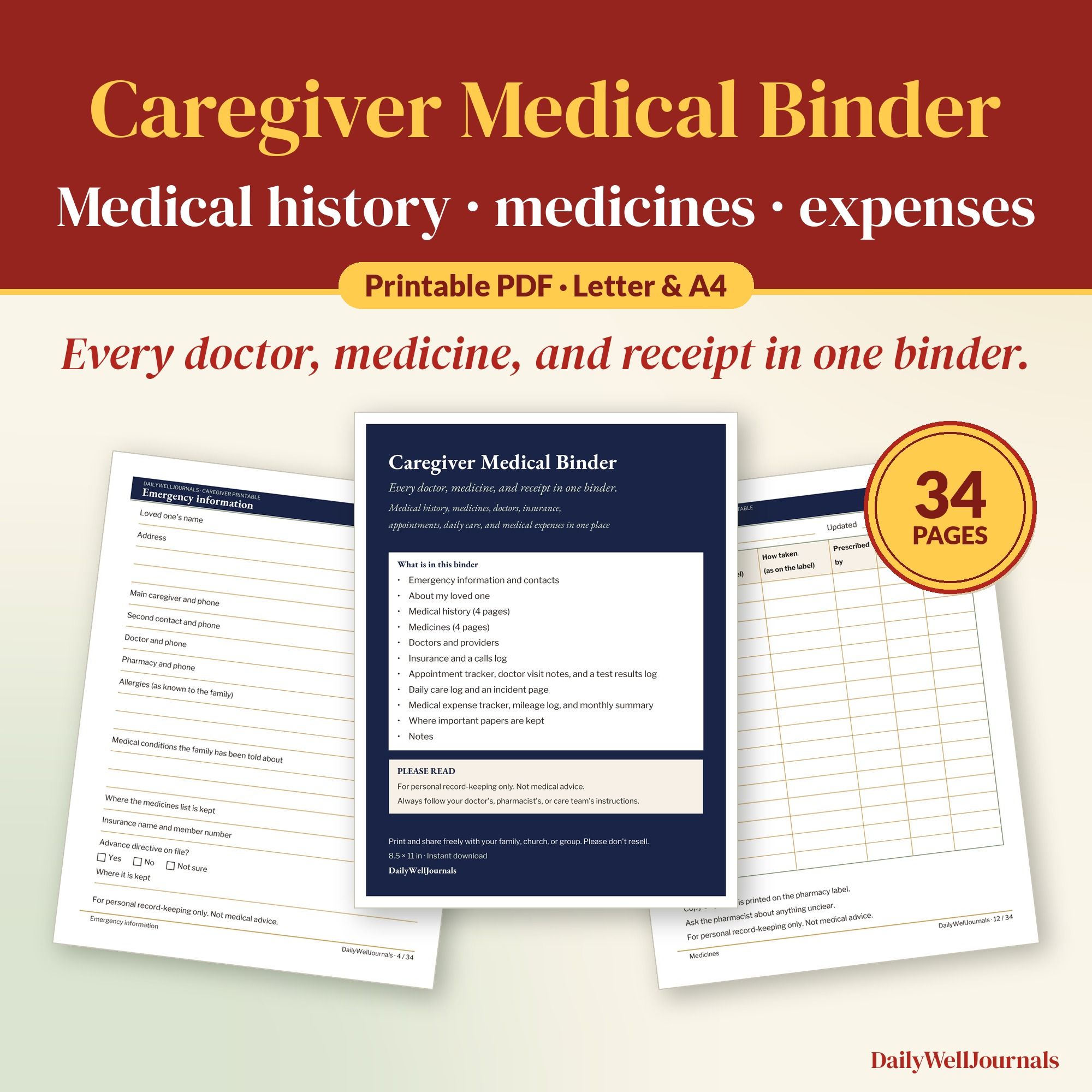
- Printable Medical Binder for Elderly Parent: Medication List, Doctors, Insurance, Expenses: the full binder with sections for medicines, appointments, insurance and daily notes
- Caregiver Medication Log Spreadsheet, Excel and Google Sheets: Appointments, Doctor Summary: one shared spreadsheet the whole family can update
If you'd like everything for these first weeks in one place, the Complete Caregiver Kit: Printable Medical Binder, Caregiver Forms, Medication Log and Health Tracker Spreadsheets brings the binder, printable forms and both spreadsheets together. And for checking in with yourself, the Health Tracker Spreadsheet for Excel and Google Sheets: Sleep, Water, Mood, Doctor Notes gives you a quiet minute a day to note your own sleep, mood and energy.
This article is for general information and personal record keeping. Always follow the guidance of your parent's doctor or pharmacist.