Health and Wellness Trackers
Simple ways to track daily health habits (in two minutes a day)
A few minutes a day of simple notes on sleep, water, meals and mood can help you walk into your next appointment prepared.
When a doctor asks, "How have things been lately?" it can be surprisingly hard to answer. The weeks run together, the rough days blur, and the good days are easy to forget. Keeping a short daily record of a few health habits can help you give a clearer picture, whether you're tracking your own day or helping a parent track theirs. If you've ever left an appointment thinking, "I should have mentioned that," this one is for you.
The goal is not to judge yourself or chase perfect numbers. It's simply to notice, write it down and bring that record with you when you talk to your care team.
Why a daily record helps
Memory is a poor record keeper, especially when you're busy or not feeling your best. A simple log can help you:
- Remember how sleep, meals and energy have really been over several weeks
- Notice patterns you might otherwise miss
- Bring specific details to appointments instead of general impressions
- Keep a list of questions so nothing gets left out
What the patterns mean is a conversation for you and your doctor. Your job is just to collect honest, simple notes.
Choose a few things to track
It's tempting to track everything, but a long list is hard to keep up. Start with a handful of everyday habits, such as:
- Sleep: about how many hours, and whether it felt restful
- Water: a rough count of glasses or bottles
- Meals: whether you ate regular meals
- Mood and energy: a simple word or choice from a short list
- Movement: a walk, stretching or time on your feet
- Things you noticed: up to three short notes about anything new
If your doctor has asked you to record certain readings at home, such as blood pressure or weight, add those as plain numbers. Follow your doctor's instructions on how and when to take them.
Keep it to one short row a day
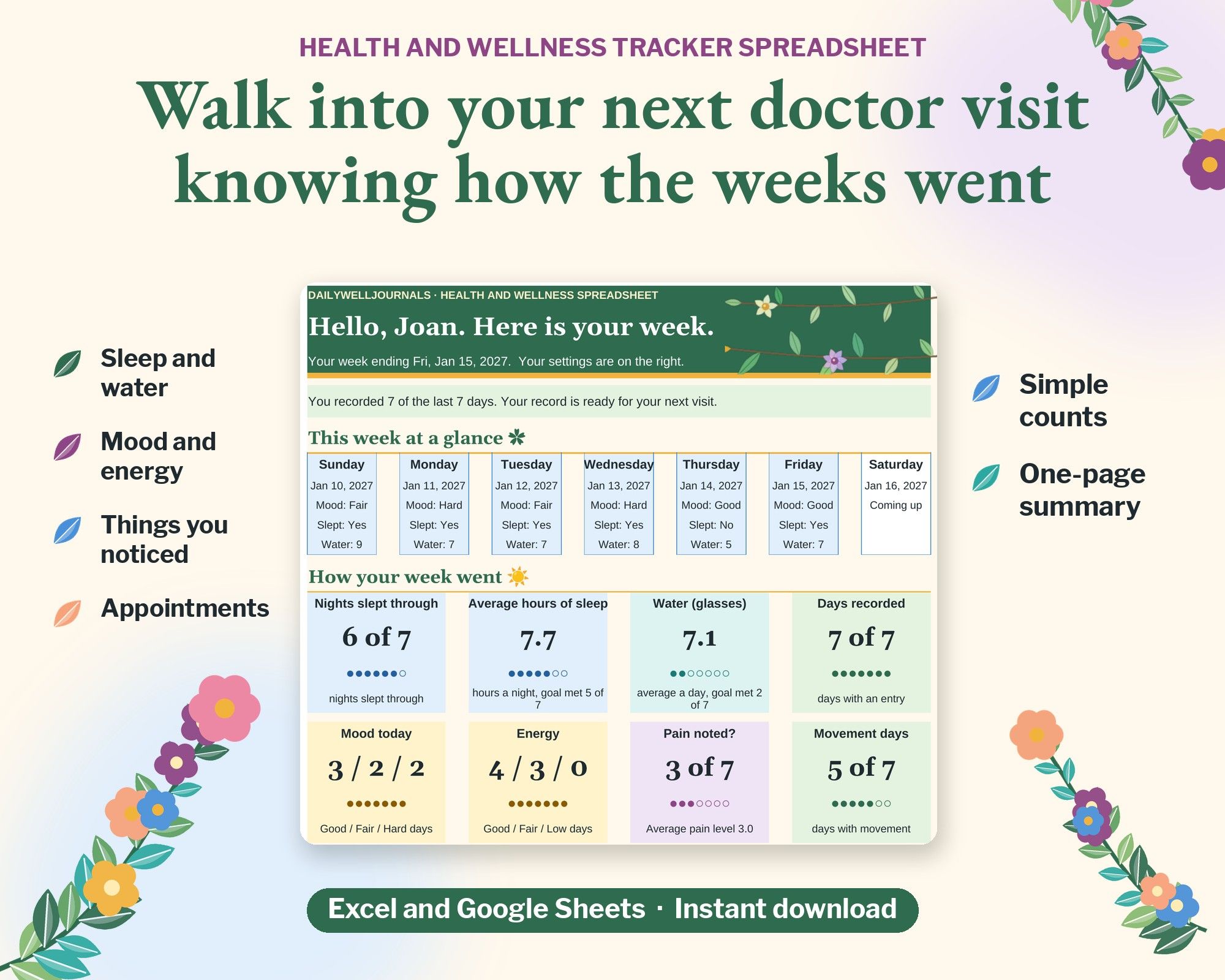
The best habit tracker is the one you actually use. Aim for something that takes a minute or two each day. A single row in a spreadsheet or a few boxes on a printed page is plenty. Dropdown choices or checkboxes make it faster still, and they keep entries consistent from day to day. Our Health Tracker Spreadsheet for Excel and Google Sheets: Sleep, Water, Mood, Doctor Notes is set up this way, with one row per day and a simple weekly view.
Pick a regular moment to fill it in, like after dinner or before bed. Linking it to something you already do makes it easier to remember.
Set gentle, personal goals
If you'd like a goal, keep it simple and your own. You might aim for a certain number of glasses of water or hours of sleep. Instead of grading each day, just count the days you met it. "Five of seven days this week" is encouraging and honest, and it leaves room for real life.
If you're unsure what a reasonable goal is for you, ask your doctor. Everyone's needs are different.
Missed a day? Just keep going
Gaps happen. A busy week, a trip or a bad cold can interrupt any routine. Don't try to fill in days from memory. Leave them blank and pick up again today. A record with a few gaps is still far more useful than none at all.
Bring it to your appointments
A daily log is most helpful when it reaches the people who can use it. Before a visit:
- Look back over the last few weeks, or the time since your last appointment
- Note anything that stood out or changed
- Write down questions on a "tell the doctor" list
- Print a one-page summary, or bring your notes, so you can share them easily
After the visit, mark which questions you asked and write down any instructions you were given.
Tracking for someone you care for
If you're helping a parent or loved one, the same approach works. Keep the entries short, invite them to take part where they can, and let other helpers add notes too. Including the person's own words, like "tired today" or "slept well," keeps the record respectful and personal.
Start small this week
Choose three things to track, pick a time of day and try it for one week. At the end of the week, look back and see what you notice. Then adjust. Small, steady notes add up, and they can help you walk into your next appointment feeling prepared and heard.
Helpful tools for this step
- Health Tracker Spreadsheet for Excel and Google Sheets: Sleep, Water, Mood, Doctor Notes: a one-row-a-day spreadsheet for sleep, water, meals, mood and notes
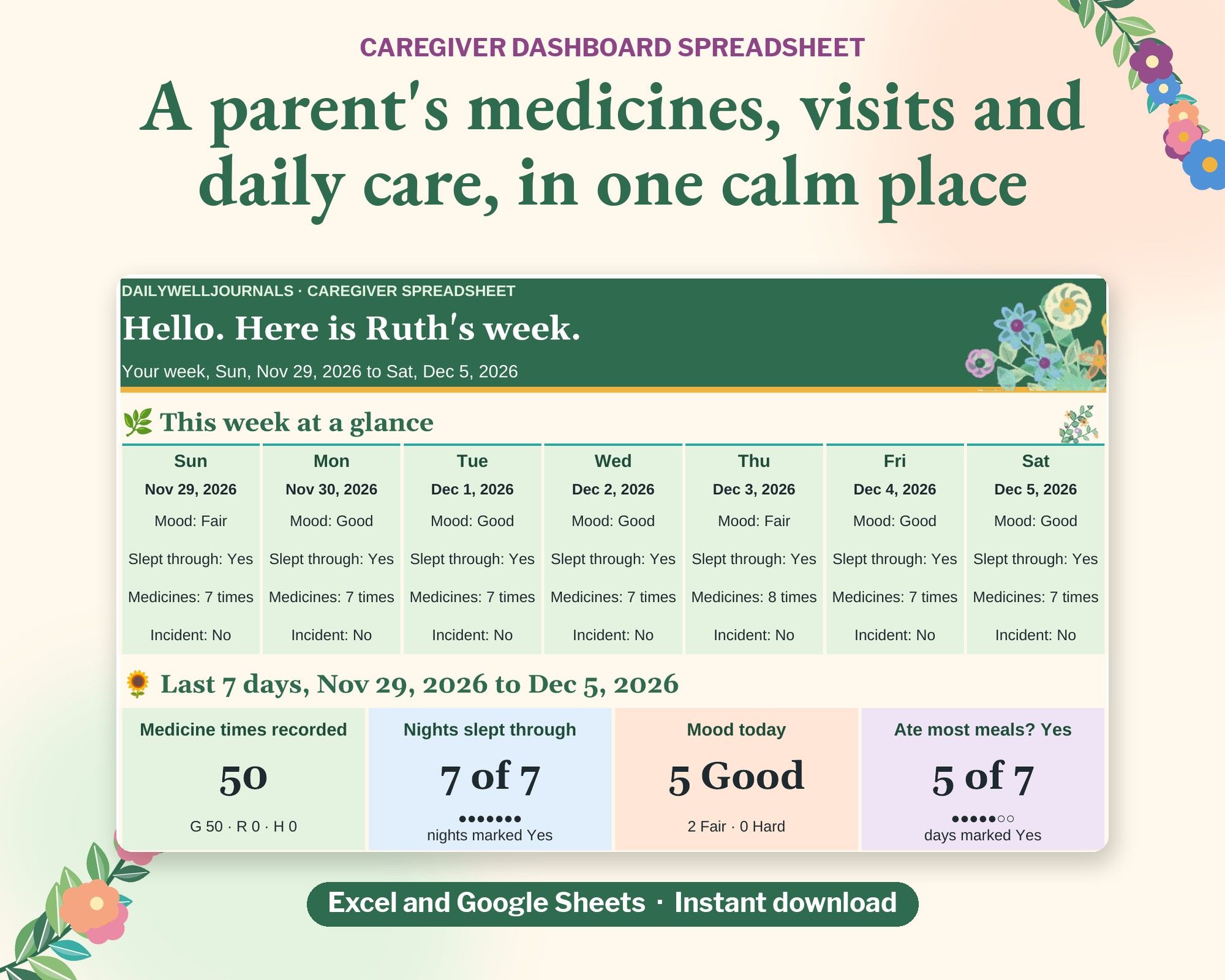
- Caregiver Medication Log Spreadsheet, Excel and Google Sheets: Appointments, Doctor Summary: for tracking a parent's day alongside medicines and appointments
This article is for general information and personal record keeping. Always follow the guidance of your doctor or pharmacist.